I don’t know if you’ve noticed, but it feels like pickles are having a real * moment * on the internet. Or maybe it’s just my algorithm. Either way, I was feeling inspired to somehow incorporate my favorite pickled snack into a loaf of sourdough. Here, I’ve combined bread and butter pickles with Cabot Creamery’s Gouda - together the two create a slightly sweet, tangy, nutty taste in the bread. Not going to lie - I had a HARD TIME not eating this entire loaf in one sitting. Enjoy!
If you’re making this dough on the weekend, you’ll want to start feeding your sourdough starter on Wednesday or Thursday so that it’s ripe for use Saturday. I use 100g of active/ripe starter in this recipe, but if you prefer less feel free to go ahead with 50-75g. The most important part is paying close attention to the dough as it’s rising to make sure it has increased in volume by about 1/3 and is visibly puffy/bubbly.
For the dough:
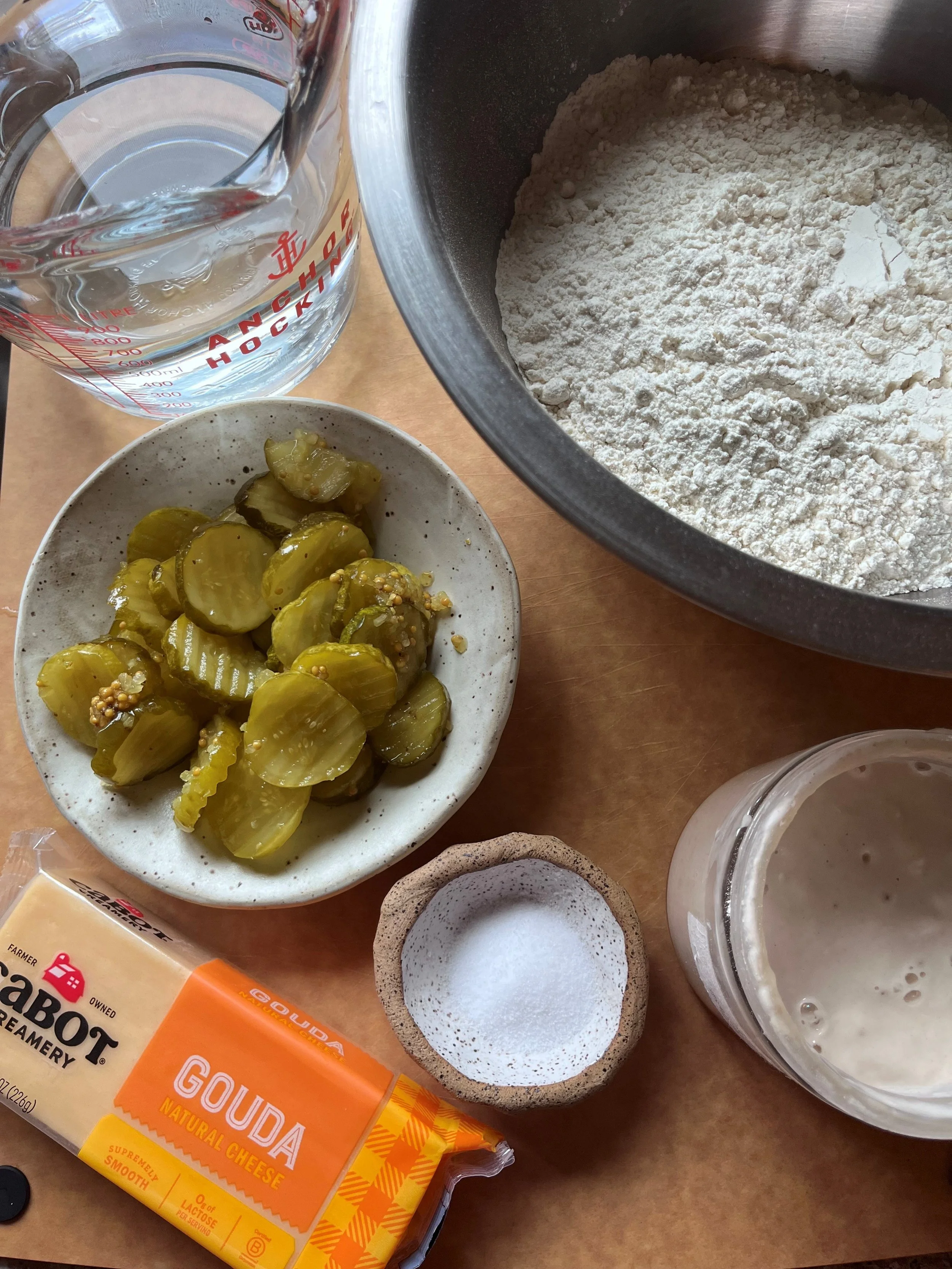
500g bread flour
375g water
100g sourdough starter
12g salt
For filling:
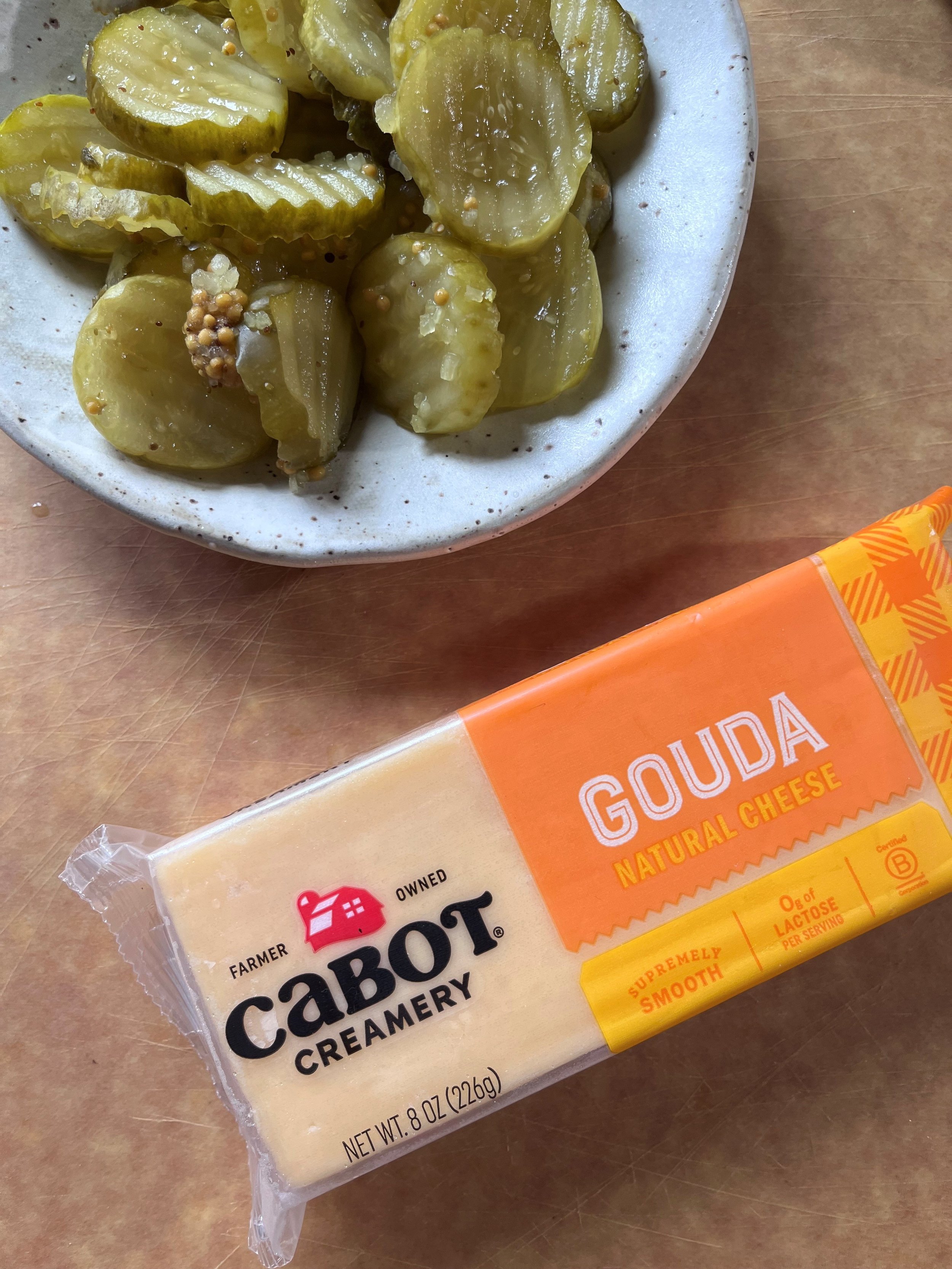
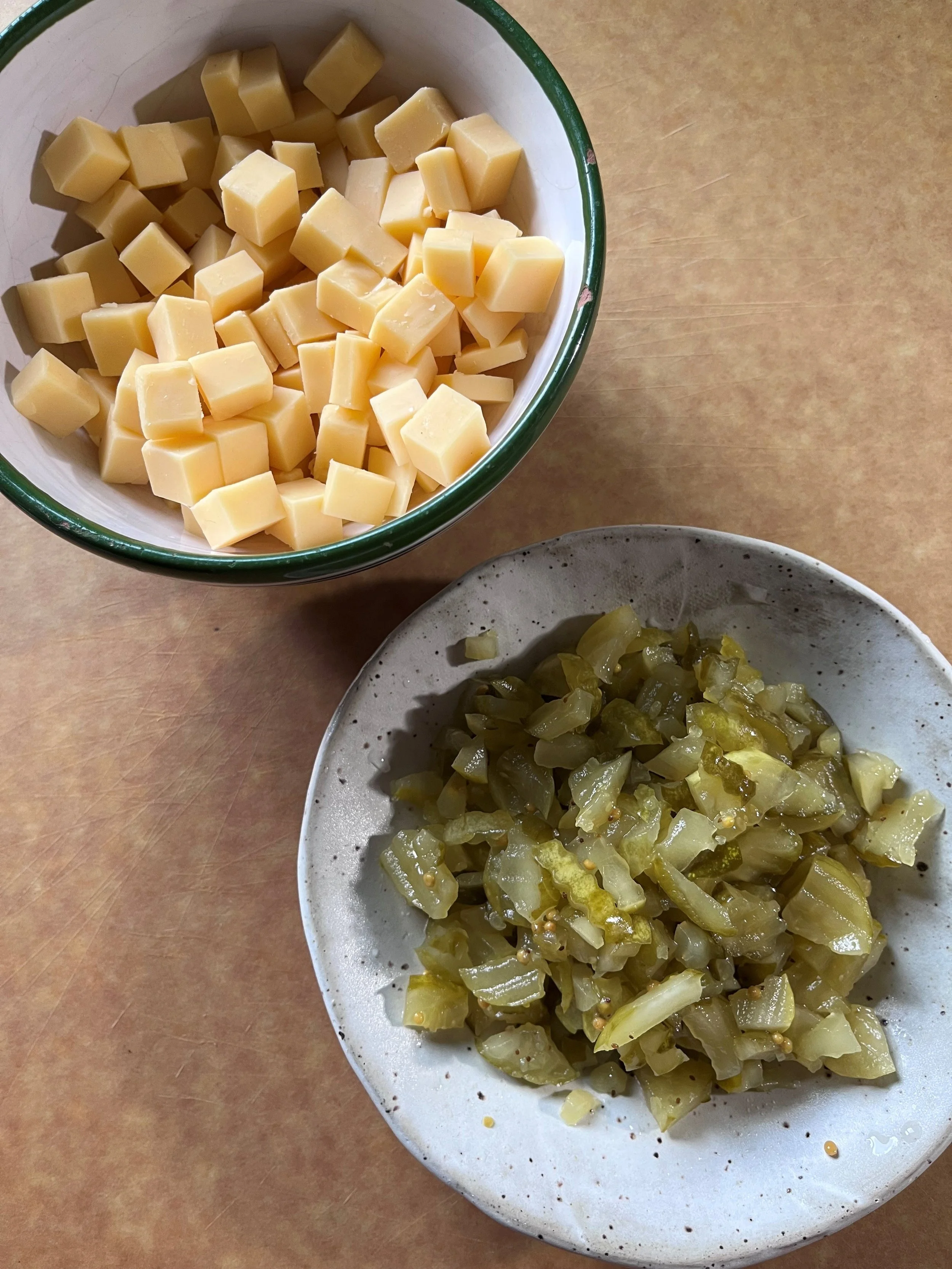
1 cup of roughly chopped bread and butter pickles
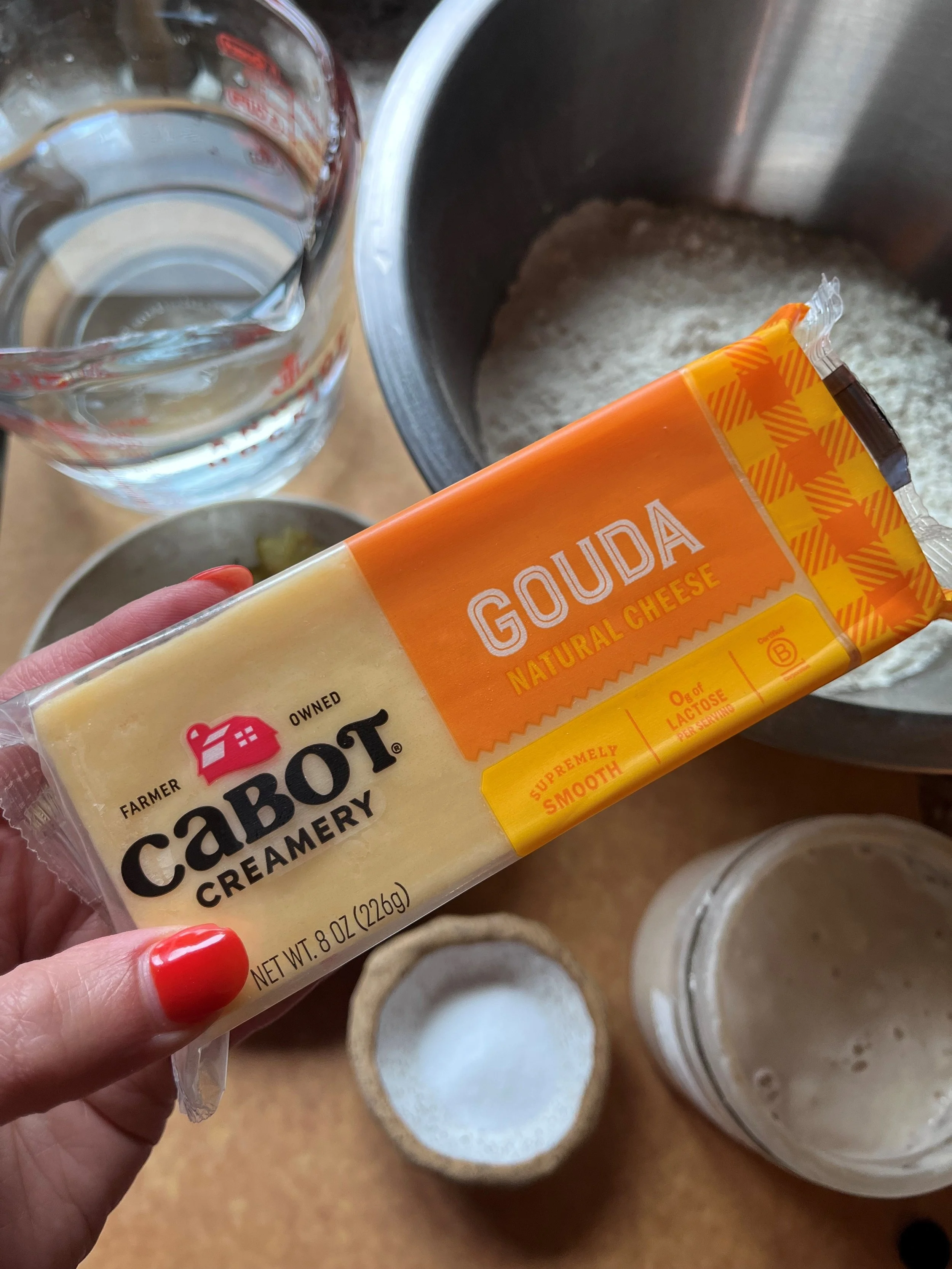
1-2 cups cubed Cabot Creamery Gouda
Instructions:
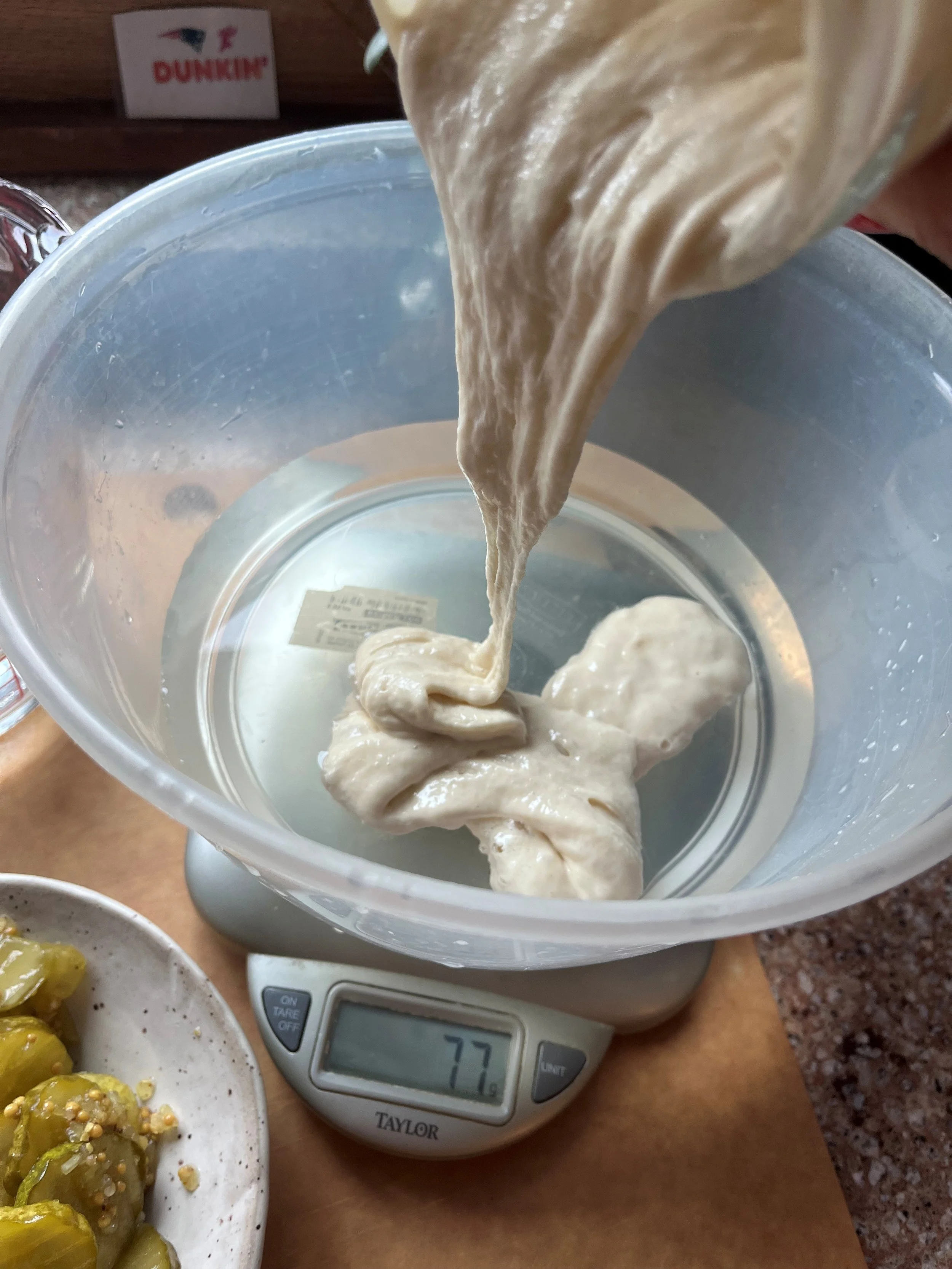
Measure 100g active sourdough starter into 375g water and whisk to combine.
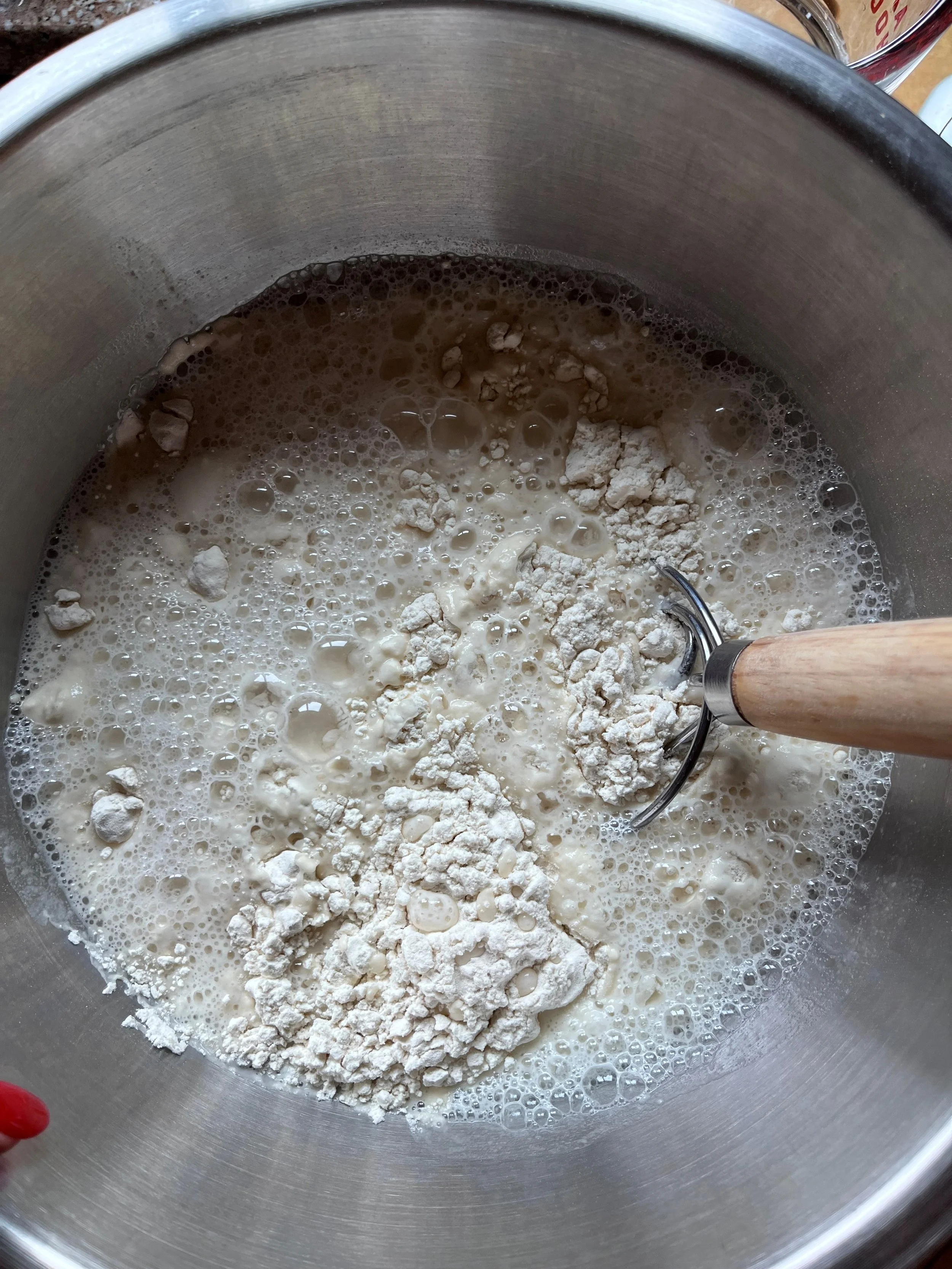
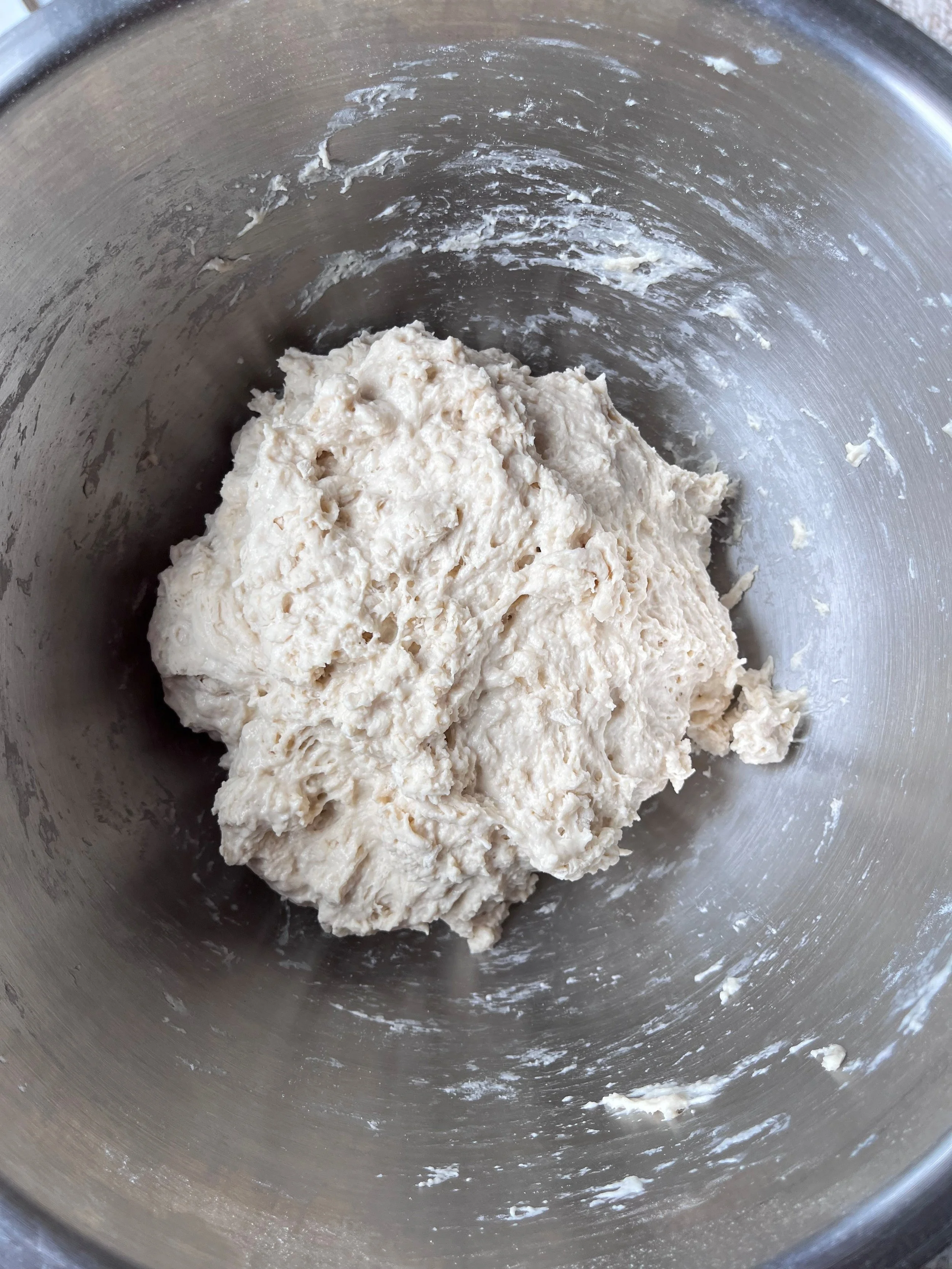
Add the water-stater to the flour and mix until no dry bits remain. Cover and let the dough rest for about 30 minutes.
Pictured below: on the left, the dough right before adding salt; on the right, the dough after the incorporation of salt and more stretch and folds.
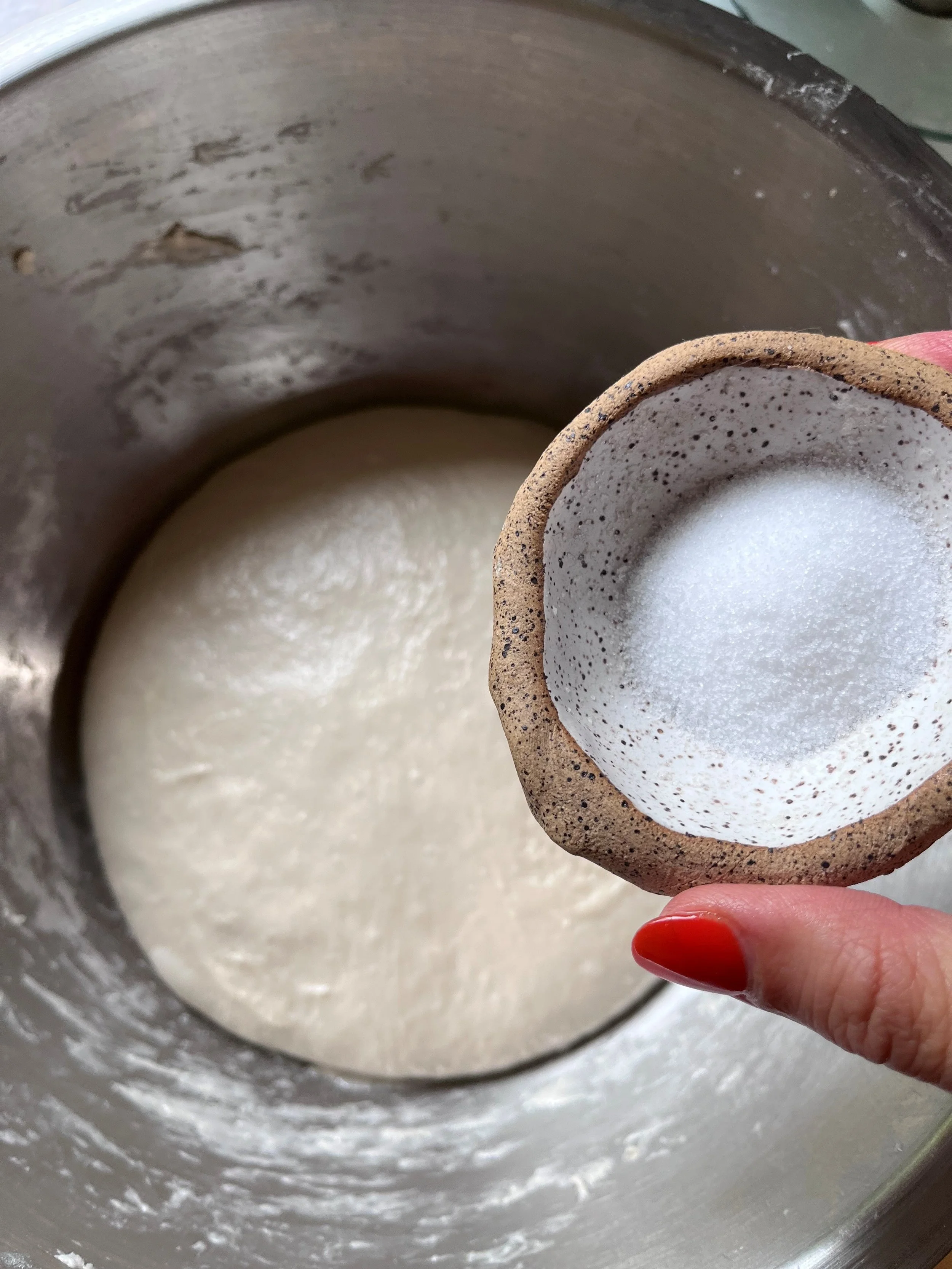
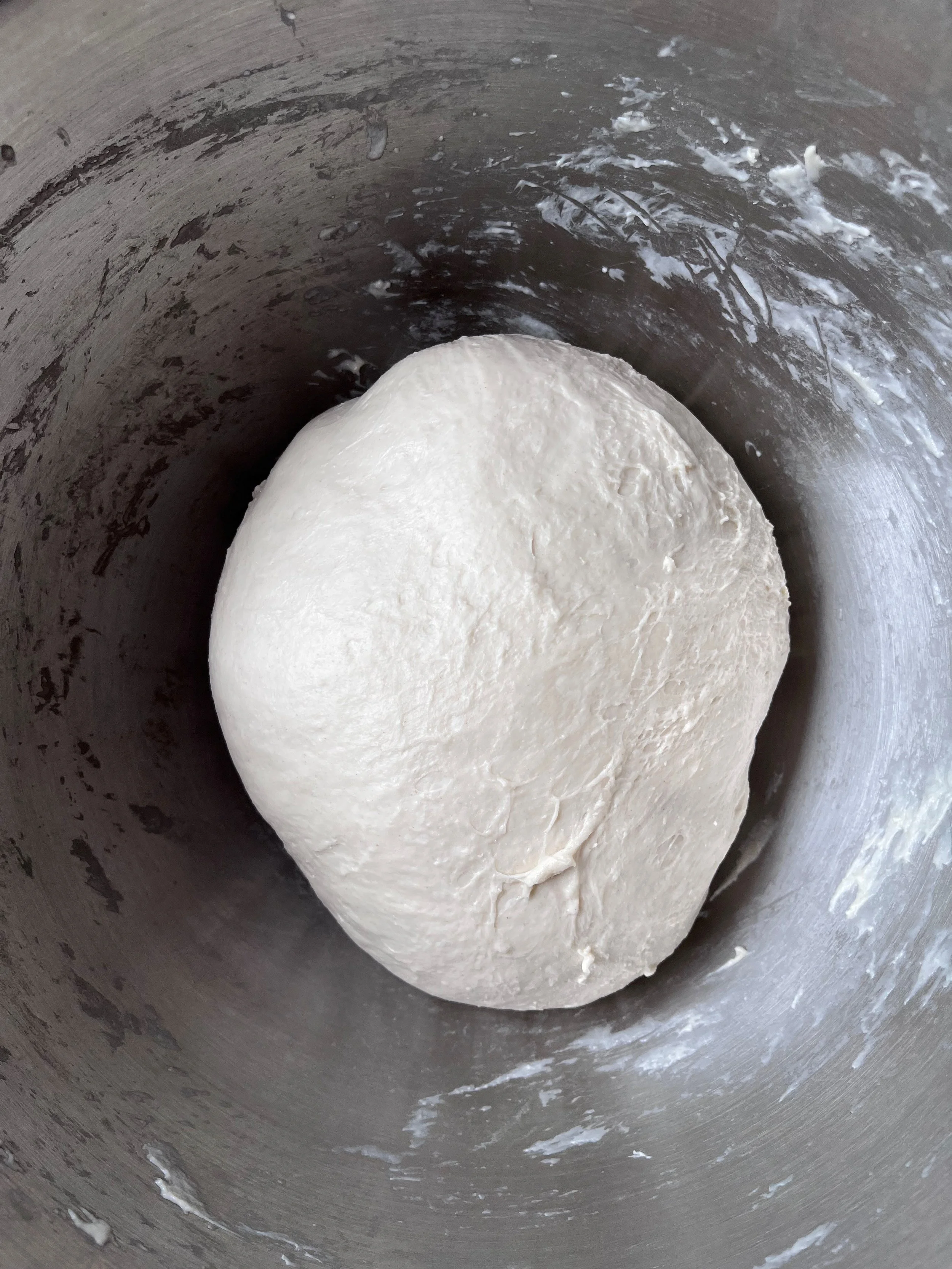
3. After the initial 30 minute rest, sprinkle the salt on top and (using wet hands/fingers) pinch the salt into the dough. Then, do some rounds of stretch and folds until the dough forms a smooth ball and the salt has been incorporated. Cover and let rest for another 30 min.
4. Over the next 2 hours, do several rounds of stretch and folds every 45-60 minutes. This is to help build up the structure of the gluten and dough.
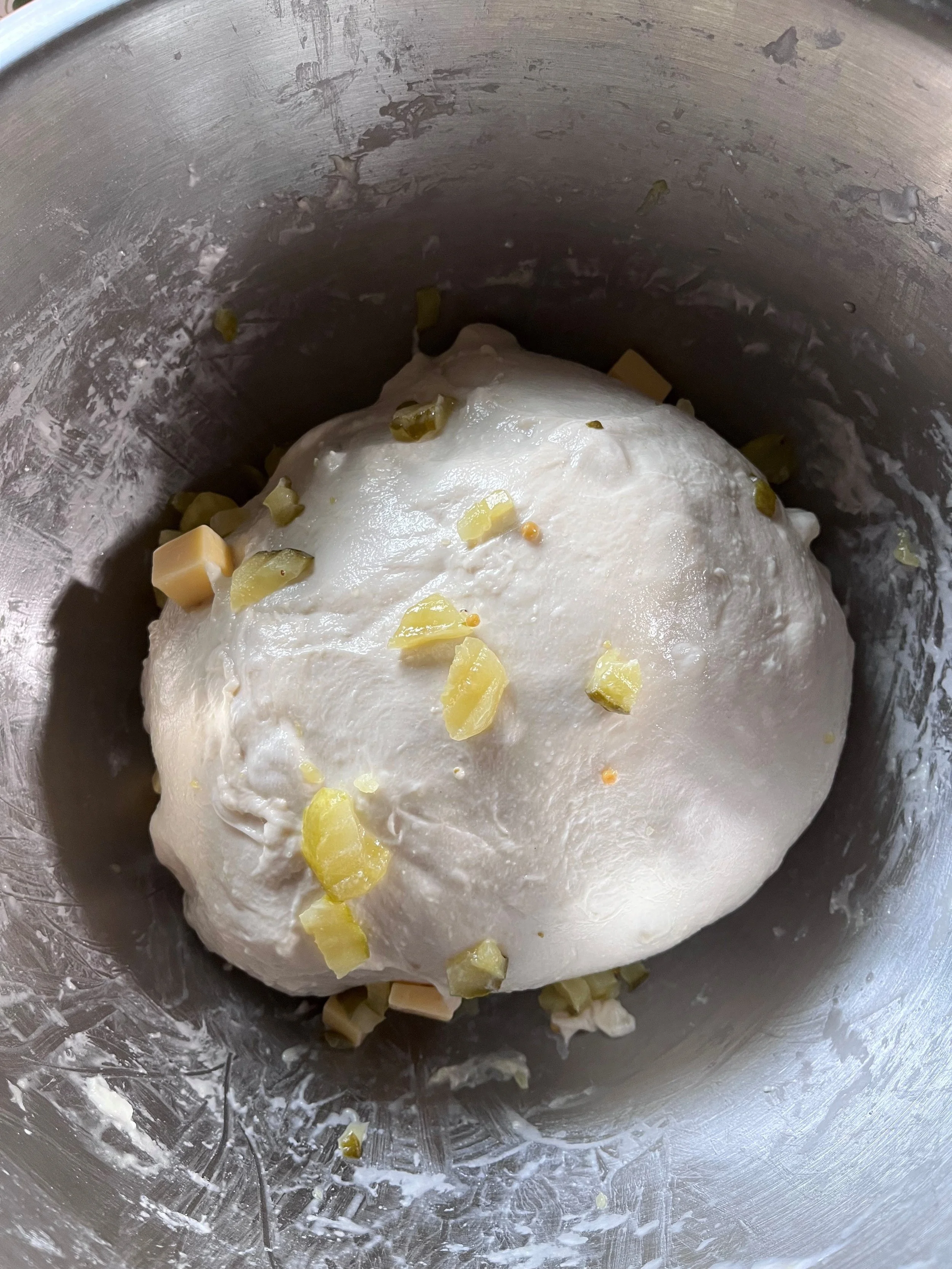
5. After about 2 hours and the dough has visibly started to puff a bit, it’s time to fold in the pickles and Gouda! I used a paper towel to gently dry the pickles, just so I wasn’t adding a ton of extra moisture to the dough. Over the course of several more rounds of stretch and folds, you’ll see all the fillings nicely incorporate into the dough.
Instructions continue below.
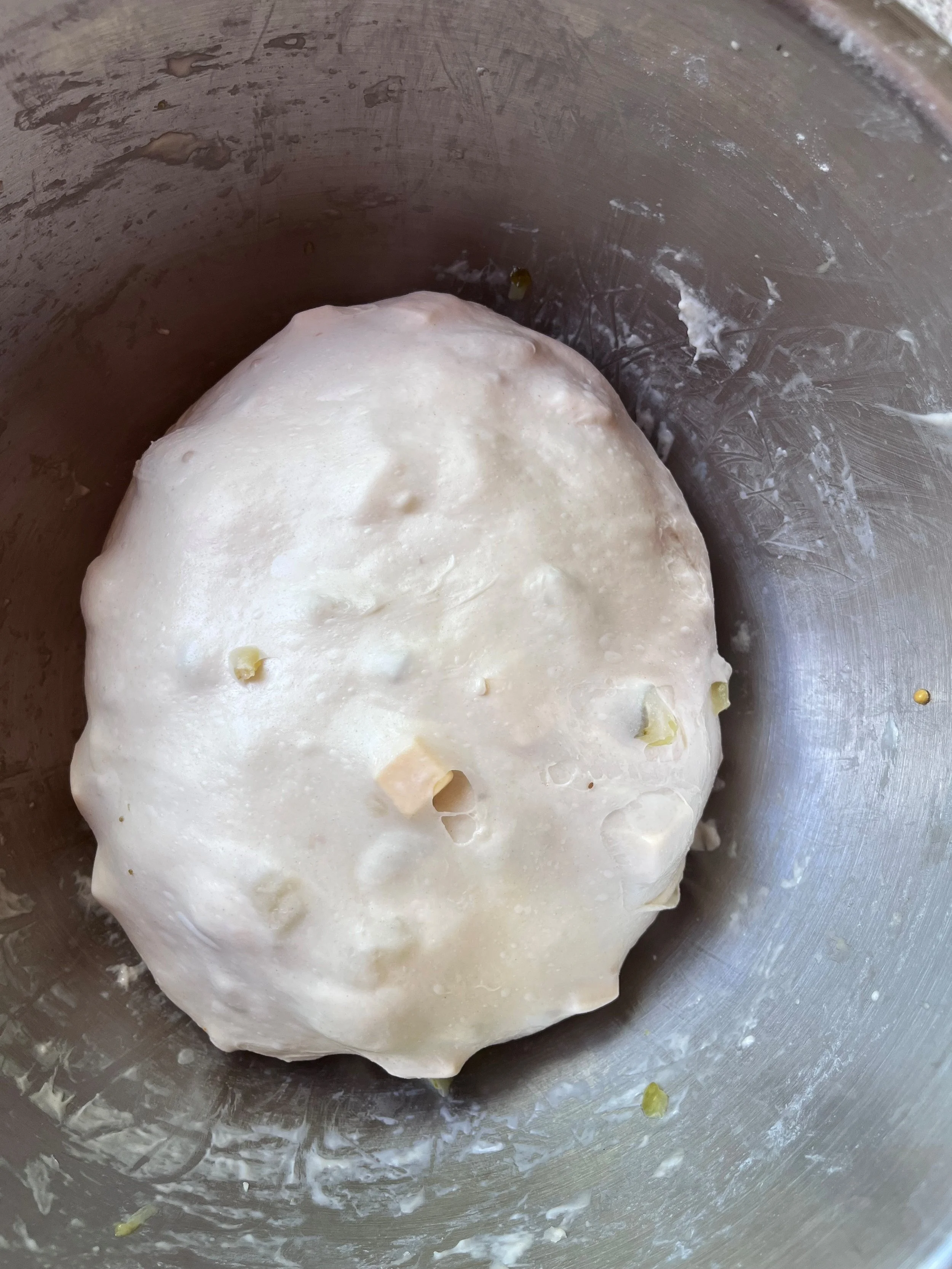
6. Cover and let rest for the remainder of the bulk fermentation. Depending on the weather and time of year, this could be anywhere from another 2-5 hours. Keep an eye on the dough for signs of fermentation. Do some coil fold or stretch and folds occasionally to keep building structure.
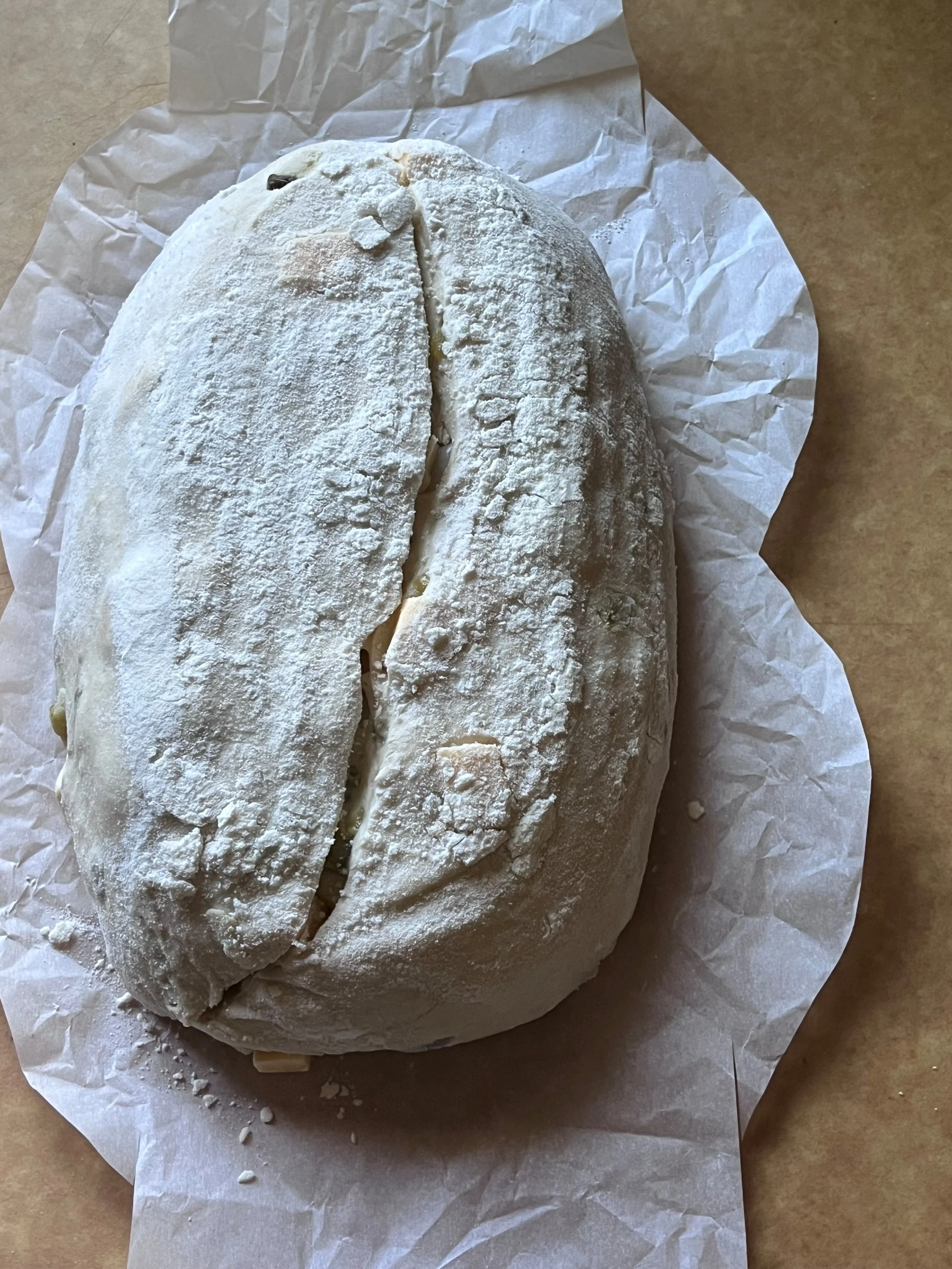
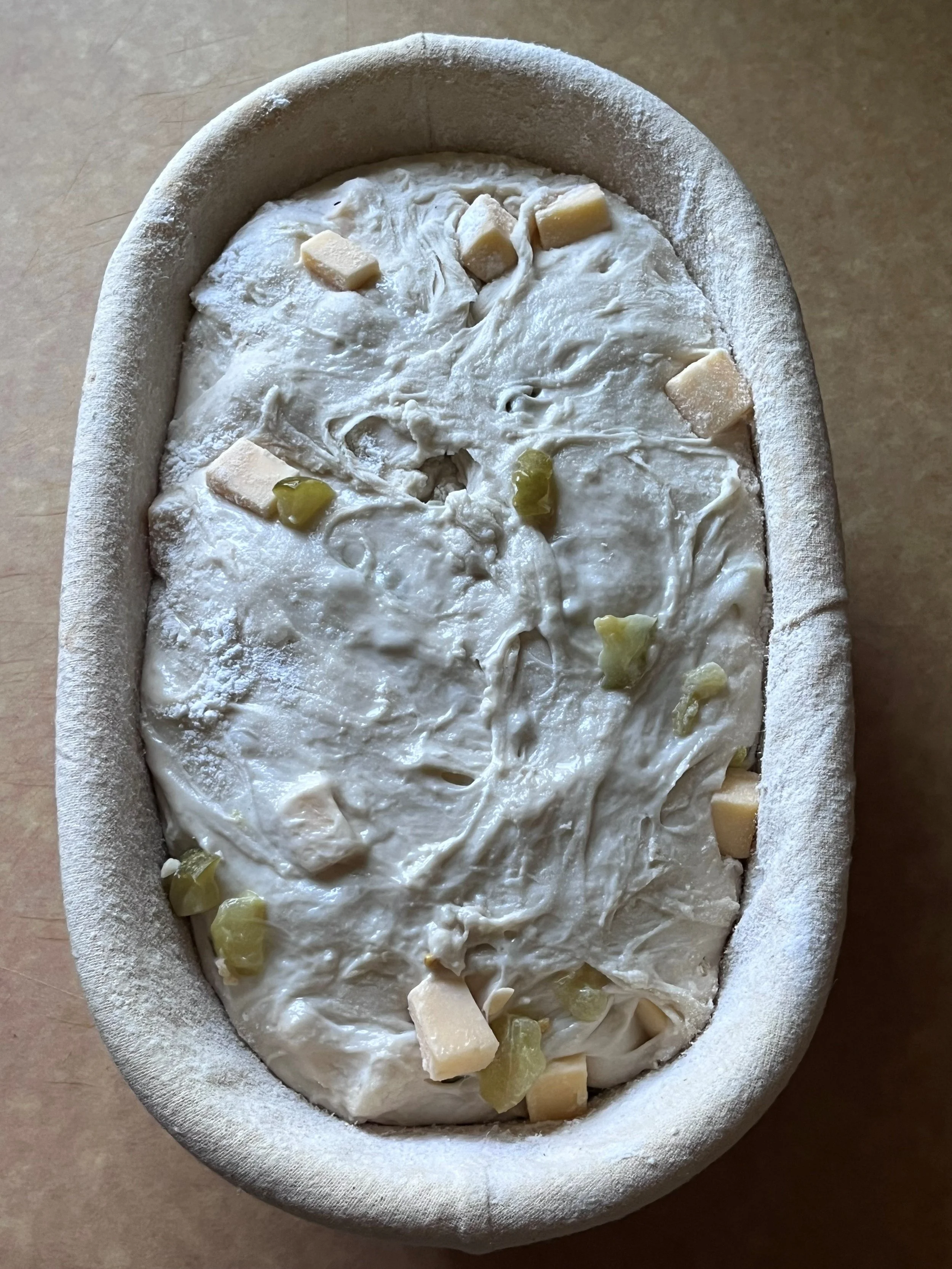
7. When your dough is ready to shape, line a banneton with rice flour (or generously with AP or bread flour) and lightly wet (or flour) a work surface. Shape your dough into a taut ball or oval (depending on what shape you’re going for). Cover, and place it into the fridge overnight.
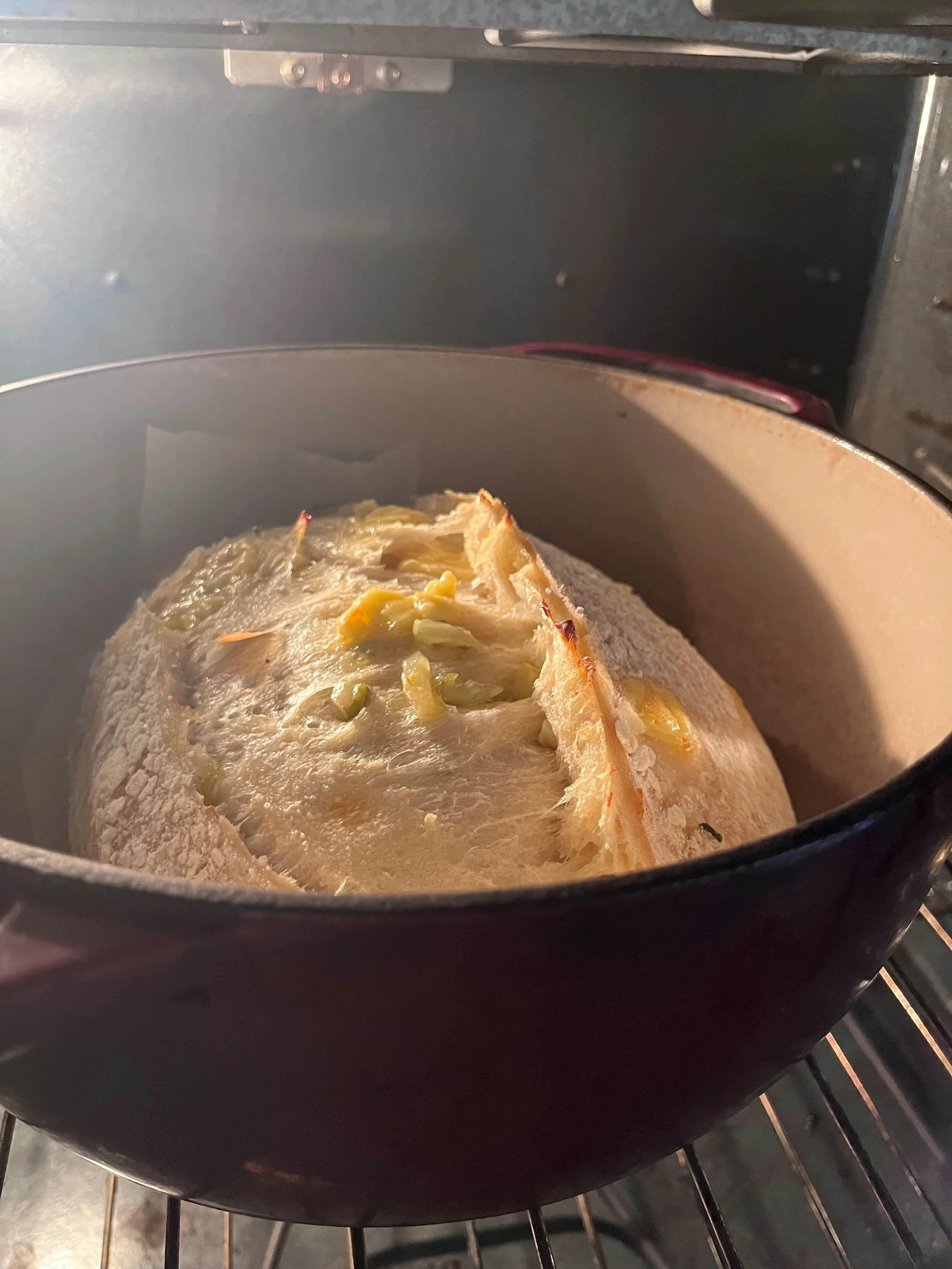
8. In the morning, pre-heat the oven to 475F with your baking vessel inside (dutch oven or heavy cast iron pot with a lid). Remove the dough from the fridge, uncover, place a piece of cut parchment paper on top and flip the dough out. Score your dough and then carefully lower it into the hot baking vessel. Cover and bake for 25 minutes.
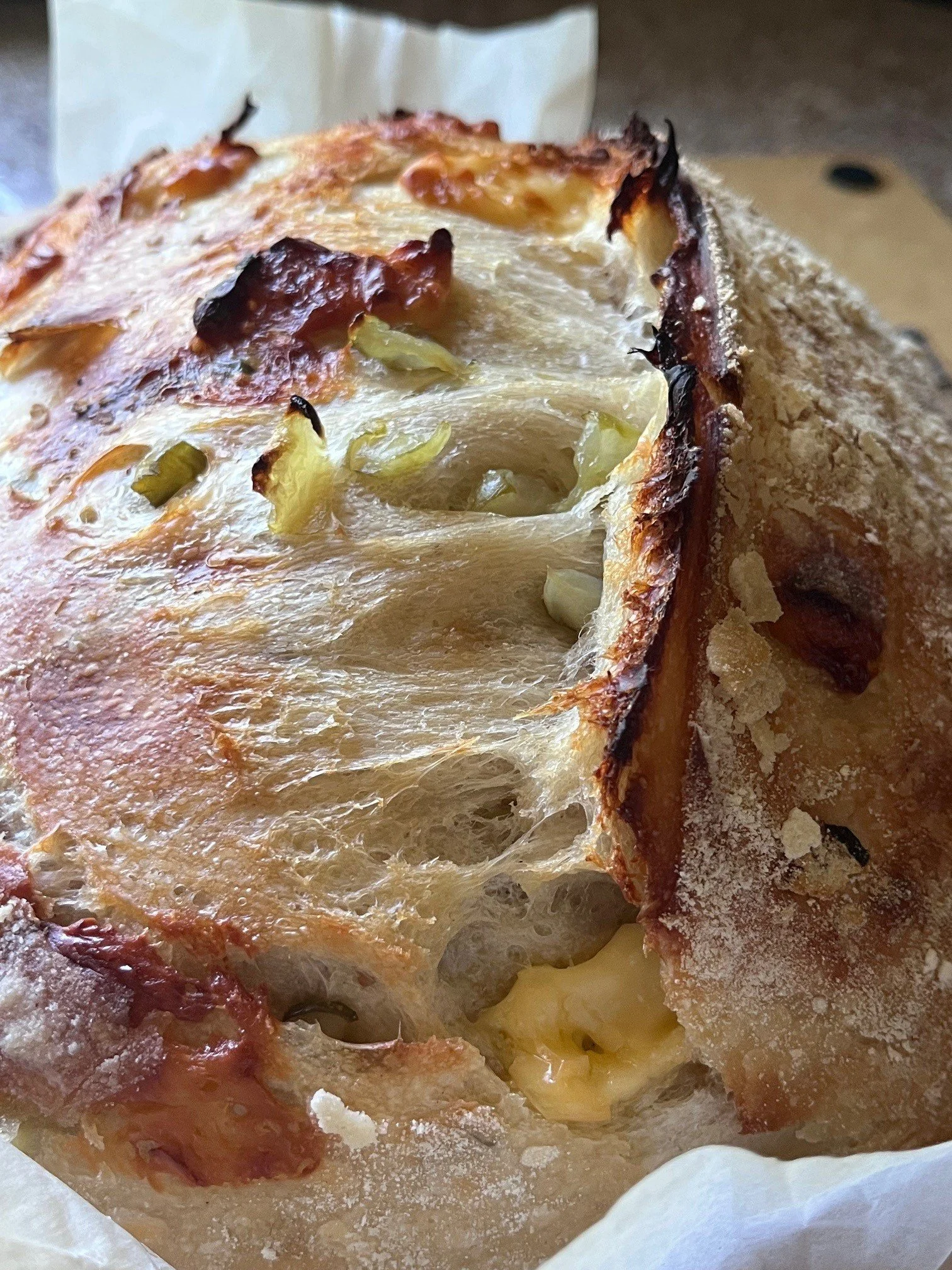
10. Then remove the lid and bake for an additional 15-20 minutes. This dough is dense and may take longer to bake than usual. If the bottom is burning, feel free to reduce the oven temperature or let it finish cooking outside of the baking vessel.
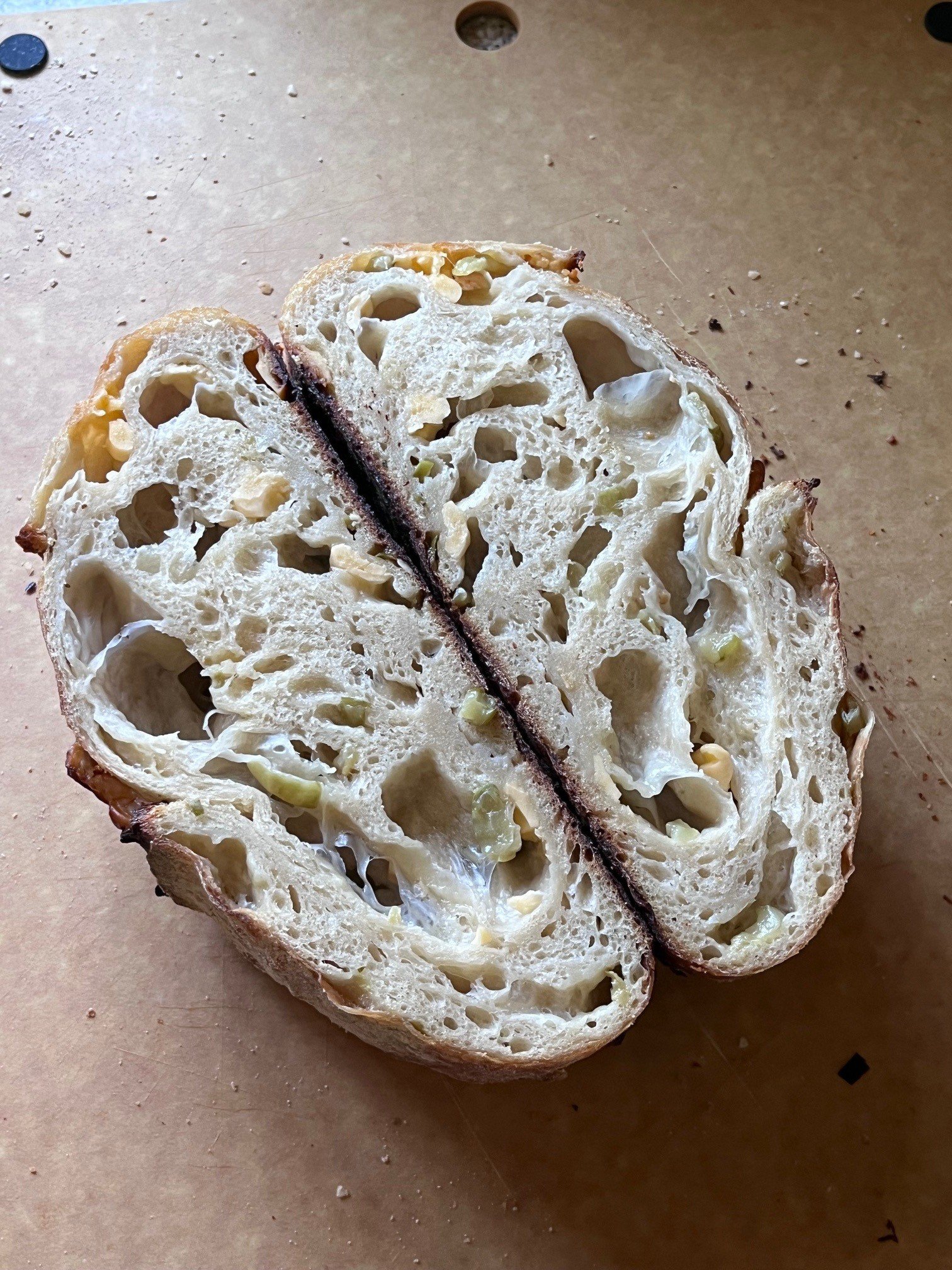
11. Let the bread cool for about an hour before slicing (if you can wait…). Enjoy!
If you make this, I’d love to see! Tag @nokneadtoworry on Instagram. Thank you to Cabot Creamery for sponsoring this post.
Read next

My Sourdough Method

Sourdough Bagels